Introduction
- Newton’s Second Law of Motion states, Non-Zero Resultant Force acts on an object, then it will cause the object to Accelerate.
- Where Acceleration is,

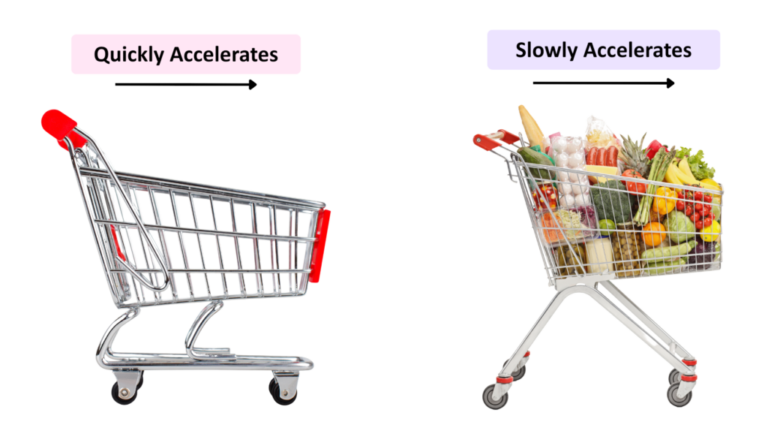
Example: Pushing a Shopping Cart:
- If we push an empty shopping cart with certain force, then it Accelerates quickly.
- If we push a loaded shopping cart with same force, then it Accelerates slowly.
What is Newton’s 2nd Law of Motion?
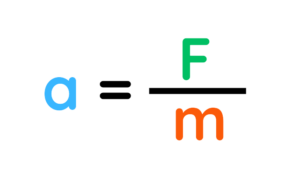
- It states that, Acceleration of an object is directly proportional to the net Force acting on it and inversely proportional to its Mass.
- Mathematically,

Where,
- F = Net Force applied
- m = Mass of an Object
- a = Acceleration
How Newton’s 2nd Law Works?
- Newton’s Second Law explains how an object’s motion changes when a force is applied.
Relationship between Force, Mass and Acceleration:
- Force is directly proportional to Acceleration when Mass is constant.

- Force is directly proportional to Mass when Acceleration is constant.

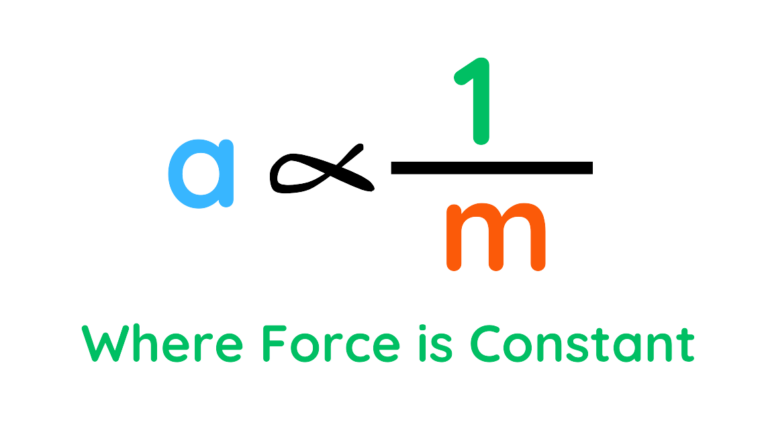
- Acceleration is inversely proportional to Mass when Force is constant.
What is Inertial Mass?
- Inertial mass is a measure of an object’s Resistance to Acceleration when a Force is applied.
- If there is more Inertial Mass then, it’s harder to Accelerate.
- If there is less Inertial Mass then, it’s easy to Accelerate.
Examples:
- Bicycles are lightweight, stops quickly when brakes are applied while Trucks are Massive, takes much longer to stop even with strong brakes.

- Soccer Ball are low mass, small kick makes it fly fast (large acceleration) while Bowling Ball are high mass, Same kick barely moves it (small acceleration).

Need help with Newton’s Second Law?
Our tutors explain it step by step, matched to your exam board.
Book a Consultation →Solved Examples
- F = 20N
- M = 10kg
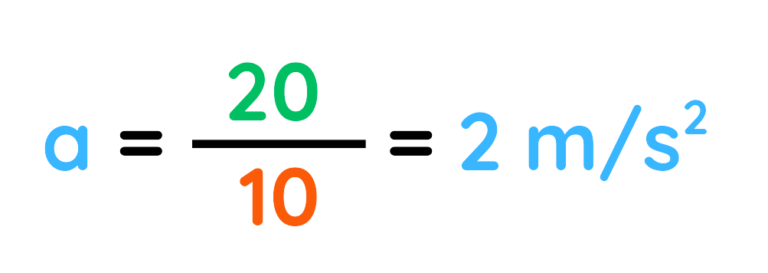
Final Answer: 2 m/s²
- F = 20N
- M = 5 kg
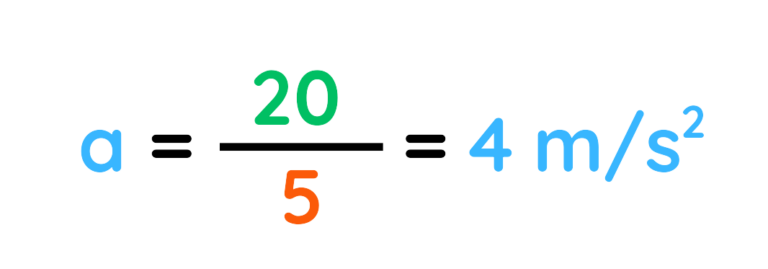
Final Answer: 4 m/s²
- A = 20m/s²
- M = 1000 kg


Final Answer: 2000 N
Frequently Asked Questions
Solution:
Newton 2nd Law says that the more force you apply to an object, the faster it will Accelerate. But if the object is heavier, it won’t speed up as quickly with the same force.
Solution:
Use the formula:
Force = Mass × Acceleration (F = m x a).
For example:
if a car has a mass of 1000 kg and accelerates at 2 m/s², the force is 2000 N.
Solution:
Mass is how much matter something has. Inertial mass tells us how much an object resists being pushed or sped up. It’s calculated by dividing force by acceleration.
Solution:
Yes. A light bicycle accelerates faster than a heavy car when the same force is applied. This is because the bike has less mass, so it speeds up more.
Solution:
A Newton Second is a unit of Impulse (force x time). It’s not directly part of Newton’s Second Law, but it comes up when studying how momentum changes over time.
